
Also, I adore his cartoon art. :-)
Other viral, simple online games: the Free Rice game, Just Curious (answer a question before you can ask one), the ESP game (labelling images).
Also, I adore his cartoon art. :-)
Other viral, simple online games: the Free Rice game, Just Curious (answer a question before you can ask one), the ESP game (labelling images).
Here is one of their graphs, normalized and aligned for when the authors so classified (by them) appeared and their change in sales figures inferred from Amazon rankings.
 They also cite an interesting academic study of whether used book sales cannibalize new book sales on Amazon, which finds they rarely do.
Why is a bug feeding a gecko? Altruism? Friendship? Some kind of symbiosis not yet understood, most definitely. For those afraid of bugs, this one looks like a piece of tree bark, nothing buggy about it. The gecko is green and attractive. Watch it here on the BBC site.
Remote viewing is a supposed ability to see things from a distance, sometimes as seen by another. It has been reportedly studied by the US military and CIA. Here is an interesting video study purporting to show it working under a controlled circumstance. I find it a bit distracting that the subject who performs the feat is impressed and surprised, too, but it is still fun to watch.
I don't agree on all points -- Some of the design flaws he identifies are tricky "icing" on the consumer cake that it takes a clever designer and a budget to go after: like having a little pocket on the frame back for a remote control. Nice to have, but not mandatory, even for a good consumer experience."We learned deeply a few hard lessons," he said. "Consumer electronics is a very difficult business. It's difficult to get it right." ...
Maybe this particular guy is rightness challenged. Or maybe he meant that getting things right takes time, money and effort, which is true.
But it sounds like he's saying that it's hard to know what's right in product design, and he'll never convince me of that. A ten-year old could have identified the design flaws in the frames I tested this week.
But getting things right does take time, money, and effort; as well as "big-picture" design management of the sort lacking at all but few companies. Someone needs to remember the people you're designing for, and to represent that by stepping backwards out of the details of schedule and bug counts and putting into perspective: "...Hey, can your Grandfather use this for the baby pictures you're sending?" It's the responsible executive's position to make the call to change the schedule to accommodate the experience-breaker issues that will threaten you in a crowded market, and to champion processes like in-home user testing as part of the design cycle.
Kodak, who comes out pretty well for their frame design in his piece, hires interaction designers, although I don't know if they have a Chief Design Officer. So why hire an interaction designer instead of, say, a 10-year old?
 Because most
10 year olds aren't up to arguing with project managers and engineering schedules, and generally keeping their head both in the gritty details and well outside, for that important user perspective.
Because most
10 year olds aren't up to arguing with project managers and engineering schedules, and generally keeping their head both in the gritty details and well outside, for that important user perspective.
Pogue's piece is still good and also funny. As a former TiVo designer mystified by the crapness of most "consumer" electronics design, I especially liked this one:
Question 10: Which is the right way to label the jacks and buttons: White lettering on black (or vice versa), white on white (Momento), or with no text labels at all (eStarling)?
We did think of this at TiVo (of course), but I still wish we had added a little LED flashlight dongle to the back, since there's always bad light at the back of your cabinet!
The saddest part of the article is the alcoholic monkey, though.The results were striking: 43 percent of subjects who had the short genes and who had experienced four or more tumultuous events became clinically depressed. By contrast, only 17 percent of the long-gene people who had endured four or more stressful events wound up depressed—no more than the rate of depression in the general population. People with the short gene who experienced no stressful events fared pretty well too—they also became depressed at the average rate. Clearly, it was the combination of hard knocks and short genes that more than doubled the risk of depression.
... Moffitt and Caspi have found a similar relationship between another gene and antisocial behavior. Abused and neglected children with a gene responsible for low levels of monoamine oxidase in the brain were nine times more likely to engage in violent or other antisocial behavior as adults than were people with the same gene who were not mistreated. Finnish scientists have since found similar effects on genes for novelty seeking—a trait associated with attention deficit hyperactivity disorder. Children who had the genes and who were also raised by strict, emotionally distant parents were much more likely to engage in risky behavior and make impulsive decisions as adults than children with the same genes who were raised in more tolerant and accepting environments.
Jack Houck, a former engineer, hosts "PK" parties in which large groups of people bend ordinary cutlery. He has some instructions and a short video up on his site. His parties are covered in an article with good photos of twisted fork tines at Mind-Energy.com. One of the attendees, Dean Radin, succeeded (and wrote about it) and has even been invited to speak at Google. (Gratuitous connection to the software industry that you didn't expect...!)
Also on Mind-Energy, reader and bender Shannan Rohde posts video, instructions, and photos of himself bending a sad little spoon.
As usual, I wonder why people aren't doing more useful things with this skill. Lack of imagination? Too much crappy cutlery in their lives?
I gave it a half-hearted shot, but haven't succeeded yet. If you do succeed, post me a note? Or if you hear of a PK party nearby, invite me along. Perhaps I lack the right party mood, post-Superbowl!
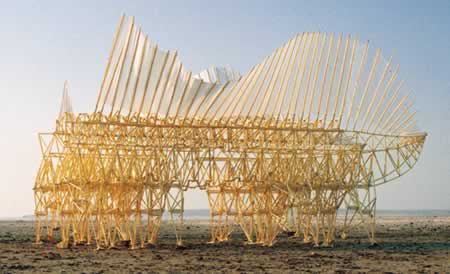
Worth the videos at TED 2007, and the explanation here on YouTube from ArtFutura for how they walk can be viewed in this Physics Engine demo of a model of one walking over obstacles.
SolidWorks' latest release featured some major changes to the UI, which caused a bit of a ruckus among the experienced users. Matt Lombard, author of the SolidWorks Bible, is one of the ruckusers. Along with posting pictures of me (hah), Matt also just posted a YouTube interview with one of the best guys at SolidWorks and one of my clients there, Jim Wilkinson. To see some inside scoop on how the company works, you can watch it on YouTube linked from Matt's blog.
A final note: It's a credit to SolidWorks that someone like Jim exists there and has authority. Not only is he a good manager, but he's universally well-respected AND well-liked by everyone who meets him, internally and externally; and he's active in the user forums answering customer questions on top of his ever-expanding day job. Jim saw a need for a usability team long before most CAD companies found out such a thing exists (for the rest of them, that was only 2.5 years ago). Kudos to SolidWorks for having such great employees and managers. It explains a lot about the product success.
The great thing about lists like this, that make you really paranoid, is that you can decide how far you want to go down the risk-avoidance path, and not go that far. Or, maybe, go there if you're in a nasty-looking hotel.

There are articles in this one on "Do It Yourself EVP," a fascinating bio piece on Russian psychic-hypnotist-mystic Wolf Grigorievich Messing, and the usual write-in articles from people who believe they've seen the strange and undead. There's even a sidebar on a dog who can predict who's going to die in nursing homes, like the cat Oscar profiled just about everywhere. (Note the difference in how the animals behave. Typical!)
But what made me LOL was the classifieds: Amid sections called "Magick," "Earth Mysteries," "Ghosts," "Occult," "Pyramids," "Voodoo," etc, they still manage to need a section called "Miscellaneous." Equally entertaining are the ads for books and services, sprinkled throughout.
I don't mean to mock too hard, though; I really did enjoy it, and considered getting myself and a relative subscriptions.
On the receipt was also a very visible (above the fold) link: "Where Will I Sit?" I clicked on it, and got a popup window with a very cute hand-drawn progess bar, so cute that I had no problem waiting through it just to watch it drawing itself. And then this even cuter notebook appeared:

I actually read the whole thing, because it continued to be so cute and even funny, with hand-drawn pictures throughout:
 There was a sweet little animation of people getting on a plane, and a diploma for people who finish the notebook (I filled in my name, yes). At the end, I looked at the page source, hoping to find something suggesting who created it, and discovered that they had even tailored the error message for people with the wrong browser support:

I was thrilled, but also a bit sad. Apart from TiVo, I have never worked for a company that cared this much about the details; was willing to take such creative risks with how they differentiate themselves; who understand that even the error messages tell people something about them and need consideration. That's design and branding done right, together!
ETA: If you would like to play with the notebook, it lives at Southwest's BoardingSchool.
I see they also sponsor a Luxuriant Flowing Hair Club of Scientists with Said Hair. I find this very interesting. Not because I am a scientist with hair of this type, but because I would like to meet scientists with hair that flows (and is luxurious). Perhaps I should found a Fans of Scientists with Luxurious Flowing Hair Club. Here are some sample locks, a kind of hair porn shot, if you ask me:

Here's a nice list of techniques for getting your portraits focused, if you're the one taking it on timer or otherwise: I'm Ready for My Closeup. I will admit that I hadn't thought of half of these!
As a bonus, if you aren't using your DSLR in manual or advanced modes yet and don't understand some of the terms above, you might read this article from Lifehacker: Master Your DSLR Camera, Manual Mode and More.
Joel also makes a good point about the difference between the company page and the product page in terms of their goals. Nice willingness to go with entirely different styles, as a result. A brave decision!
I've been involved in a few home page design discussions the past year of consulting. They tend to be wicked problems (i.e., ill-defined, messy, and circular). Some of the reasons for this:
One client was working on a new project that was barely outlined in a development spec. He asked me "What do we do for our home page? We're really worried about that." It was premature for this, because most of the business plan didn't exist yet. The design input they REALLY needed was "Your business idea is a little too complicated right now. Can you simplify it first? Here are a bunch of others in your space with successful 3 bullet explanations on their home page. Can you meet that level of simplicity?"
Sadly, most designers aren't in a position to spur you to clean up your entire business plan. Or to make it clear that this might be needed because it's hard to make it sound simple when it's not. (At least, without lying.)
I think design is a strategic activity - requiring hard, brave, high level decisions in order to direct the minds and hearts of customers; and a creating a good business plan is therefore partly a design activity. To create a business that is clear and attractive to prospects, and therefore portrayable as such, requires high-level decision making inside a company. If more business leaders thought like designers, or more designers were in business roles, the execution of the home page would be a lot simpler.
Any number of excellent books have been written about project management and scheduling, but few of them confront this phenomenon head on, and I've now seen it at a bunch of companies. Someone important, or even just useful, can cause a lot of damage by having a bad memory. If they're a manager, it might become their employee's second job to stockpile email in case they need to "prove" who's mistaken at review time. If it's a peer, they don't pull their share of the work because they conveniently forgot to do most of it and someone else has to, or some schedule slips. This might be passive aggressive (if they're not a psychopath or an asshole), but since it's the holidays, let's consider that it might be a medical problem. Maybe they're eating badly?
A few suggestions for coping: Start ordering in veggie platters. Take them out for sushi whether they like it or not. Leave them Secret Santa Ginkgo Biloba supplements by their monitor. And finally here's a list of some nice articles from Psychology Today on food for your brain, which I rather enjoyed:
While I'm at it, here's a link to my older post about a talk I gave at IBM on fan video creators. LiveJournal is one of the main places they are hanging out now, and in that post and talk I showed some network relations among "vidder" groups on LJ. The anime vid crowd is very distinct from the other TV show vidding crowds. They have an aesthetic and interests that evolved very independently. (As a former fan vidder myself, I don't love LiveJournal and what it's done for and to fandom's communication, but it has certainly been a nice central point for many folks to find each other and also avoid each other if wanted. LiveJournal's prominence in online media fandom is also mentioned frequently in Henry Jenkin's Gender and Fan Culture discussion.)
And speaking of gender and academic studies, I have a minor peeve about the discussion of vidding and Lum's work in that New York mag article, and in Henry's writeup. I suppose this is also one reason I got disillusioned by the academic studies of fandom while I was on their fringes as a fan vidder and grad student. There's a bit too much focus on stuff like "feminist critique" of TV shows and other big concepts that seem to "legitimize" something that to outsiders probably looks goofy and crazy. (Unless they're active in sports fandoms, and even then, that's okay in a way that TV fandom isn't!) The very vids that were picked of Lum's to host on NY mag's site in a postage-stamp-sized, stopmotion playback fashion are kind of off-topic, to me. They aren't the emotional ones about plot and story and character, they're commentary with gorgeous images and effects. I don't mean this in any way to criticize her work, which is excellent as always; but they aren't the ones of hers that are best-loved by the fan consumers. She herself says she goes for the emotional punch; so to me this makes these vids odd choices for the story, perhaps ones that were thought to hold up better to outsiders?
And a few comments on the online video THING that bugs most of the purist vidders. It may mean greater access and easier distrubition being on YouTube or Imeem, but the playback still sucks. Big screen quality of experience, caliber of edits, timing, etc. are all important to fan vidders. These online sites don't support it, and that means a lot of vidders just aren't happy with them as a means of distribution. If you watch vids on YouTube, you aren't seeing the real thing. I'm just saying. It started long before the Internet, and still lives in parallel, despite what people having conferences about online video might say. To illustrate, here is a long list of vids made about the Professionals (a UK tv show), with dates and authors. Look at the dates lower in the list. Those were made on VCRs, the way many of us started.
Relevant other links: DIY video conferenece, covering fan video in part, in February 2008. (They have reviewed submissions for the ones they think are best, by their criteria, not community criteria, again? I know a fan or two is involved, but still, their conference site worries me.) Some friends of mine whom I used to vid with posted a sampler of vids, including one of my co-authored ones, announced here. If you want to see all of Luminosity's fan works in non-postage-stamp jerky playback, her list is here.
Some tips: Choose one or two evocative pics, not 8 of the same thing. Mix up people with landscape, for variety. Insert movie clips occasionally, to spice it up.
Software to make this easy: Surprisingly difficult to make a simple animated slideshow, it turned out. I tried a few programs that were on my computer and finally got results from Photoshop Elements, which will export a nice slideshow movie to Premiere Elements for creation of the DVD itself. On the Mac, the settings and process was a little hidden and didn't offer the same control over the zoom/pan effect, but you can achieve the same results with iPhoto and iDVD. It seems that Picasa will do it (haven't tried). Some DVD authoring apps will, and any movie-making app, but you really want some tools built for slideshows to make it easier for yourself.
Disclaimer: I've definitely violated these rules too, so this was a good reminder to me, too.
The Blue Iguana is indigenous and endangered, but there are lots of other green iguanas and little brown lizards running around. The retired ones sun themselves on rich people's personal boat docks and pose for you. The blue iguanas roaming at the botanic gardens sport blue bling, a sample shown here:

The sting rays at Sting Ray City were amazingly interested in people. I guess they know a good food thing when they see it. You are swamped by them when you drop anchor in the shallow waters. The story is that fishermen cleaned their catch out there to avoid mosquitoes on land, and one smart guy turned it into a tourist attraction, undetered by Steve Irwin's sad demise at the tail of one. (Here is an article on "sting ray injuries survived.") They feel mushroomy on their underside, and sandpapery on the top side.
Here's a romantic shot of them in the water, but for up close and personal, you need to go see my critter picture collection here. (There is only one underwater shot there, to show off their smile, and one of the sting ray kiss you get wrestled into when you visit them on the tourist boats.)

Finally, turtles are farmed for food and tourists there. I found the crowding conditions a mite disturbing, but it's undeniably an aesthetic experience to see all those shells and mottled skin up close. Also, undeniably expensive to get in. I did it for the photo opp, and the chance to snorkel in a private lagoon with turtles in training. Training for people like me touching them while swimming, I guess. In said turtle park were also pretty birds from the Caribbean, which you can see in the critter photos.

When I got home, I discovered a newly arrived National Geographic Traveler mag had an article reviewing destination islands, scoring them in part by how much tourism is affecting them. [I discovered I'd been in a few of their top 20 already, and added more to my destinations desired list.] They were pretty much on target about Grand Cayman: "Exceptional diving and snorkeling but banking defines the island. Tourism is heavily weighted to cruise ships." I'd add: with huge resorts, and retirement McMansions as seen in Florida. But it was the best walk-off-shore-snorkeling I've found yet.
Cayman photos here: turtles, lizards, birds, rays, beaches.
For a more eclectic and perhaps affordable set of options, use the site a friend recommended, from which I found my trip to Morocco: Adventurecenter. They aggregate trips from many companies, and have reasonable search options including price. Airfare is usually not included, and you'll find that it's the biggest issue with most of the more interesting destinations (read: off-the-beaten track). If you're afraid of traveling to "exciting" places alone (as a woman, I am), this type of group travel can be really fun.
For other resources on cheap travel, I recommend this site: Worldscheapestdestinations. It's not pretty, but the info is good.
